Madrid,
The tenth show that the “la Caixa” Foundation programs in collaboration with the British Museum, and that today has begun its journey through other CaixaForum centers in Madrid, is “I am Ashurbanipal, king of the world, king of Assyria.” It offers a triple opportunity: to delve into the ultimate history of the Assyrian Empire, which controlled from Egypt to the west of modern-day Iran before being attacked by a confederation of Babylonians and Medes at the end of the 7th century BC; that of contemplating magnificent works of art linked to the expression of its royalty and the State itself, belonging to the British collections, but in many cases not regularly exhibited; and to reflect on the past and present relationships of power, violence and culture.
The figure of Ashurbanipal, remembered by Greco-Roman stories as Sardanapalus and with that name represented by Delacroix, does not resist Manichean or simple analysis: his army was a war machine then without parallel, with the brutality that this implied, while the king he served worried about learning to read and write, surrounding himself with the best minds of his time, being immortalized as a cultured monarch and establishing in Nineveh the first library created with the purpose of compiling the knowledge known until then. Proud of his erudition, he not only saw it as a center of knowledge, but as a means to exercise his government: controlling that knowledge was, even then, a source of power.
The British Museum already proposed an exhibition in Great Britain in 2018-2019 with that title – taken from a text by the king – which has now been adapted for the Spanish public and which takes us to an ancient world shaped by violence and war, but connected through ideas. The more than 150 objects collected create the microcosm of a very rich culture, in which certain experts interpreted signs from the gods while letters were sent with an envelope and seal and tasks and battles were captured in friezes with very interesting scale games.
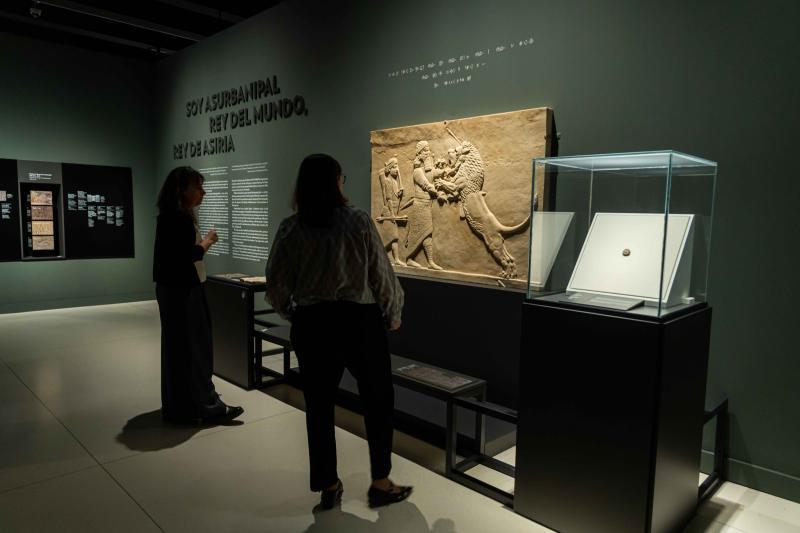
The exhibition tour begins with the essential relief that presents Ashurbanipal killing a fierce lion of the same height as him. That animal was a symbol of his reign, but in this scene, in which the savage brutality of the lion and human reasoning seem to confront each other, there is not only myth: the Assyrian kings, annually, had to ritually kill a specimen in Nineveh, the capital of the empire, to emphasize their function as monarchs who order the world. Therefore, this will not be the only mortally wounded lion that will come our way at CaixaForum. In addition, the king carries two stilettos on his belt intended for writing; He claimed, thus, as a scholar.
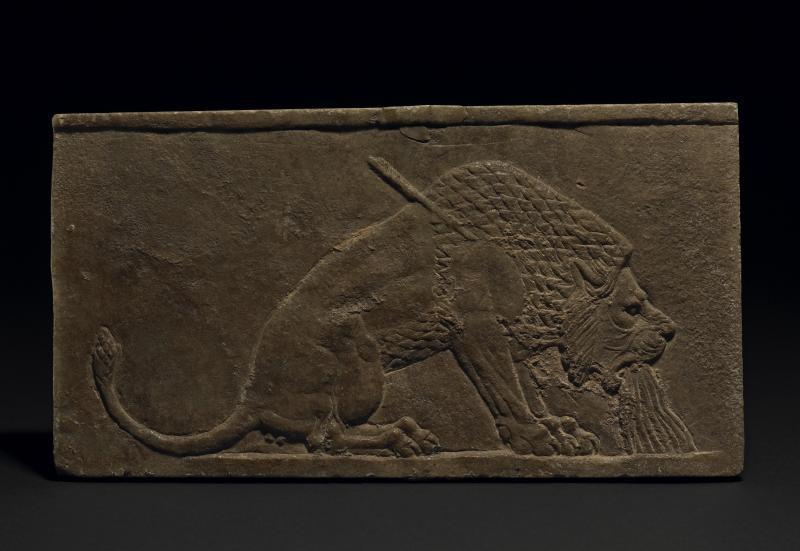
A second chapter of the exhibition focuses on Nineveh, a city near present-day Mosul (Iraq) that Sennacherib, grandfather of Ashurbanipal, transformed into a first-rate nucleus whose palace was to astonish all peoples; There were the famous winged bulls that were to protect their occupants against supernatural forces.
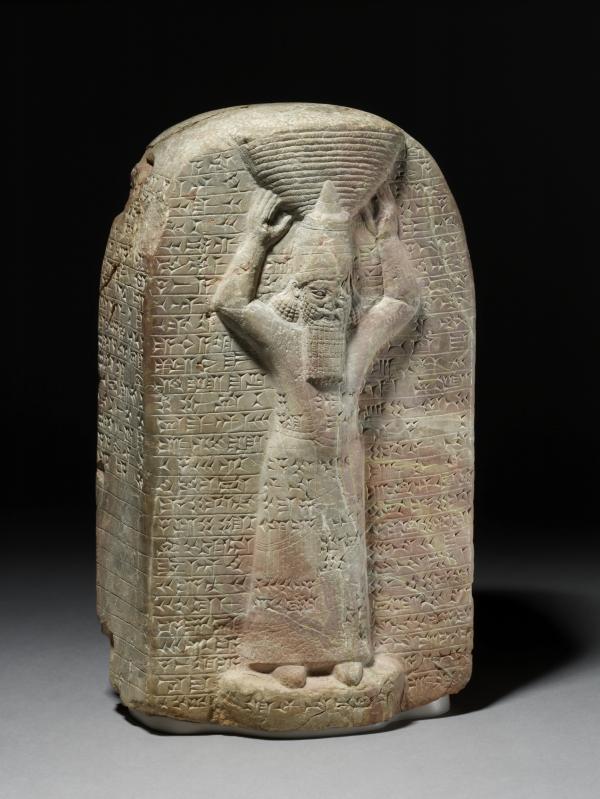
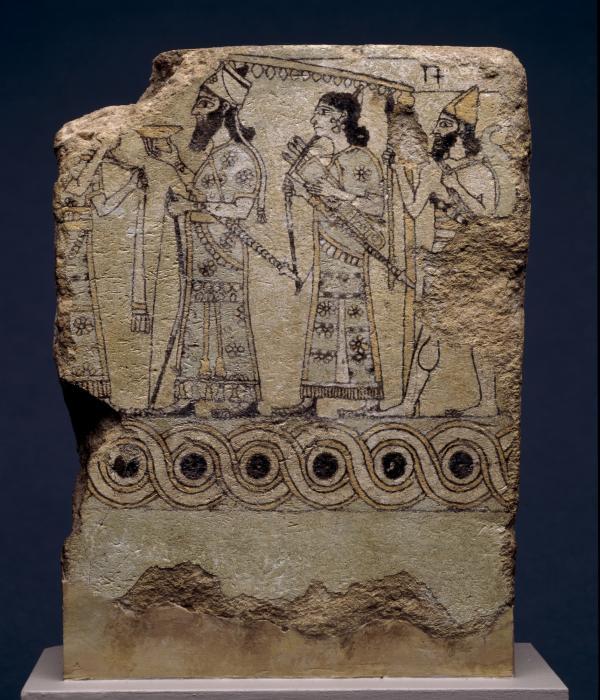
From there Ashurbanipal would rule for most of his reign, until he built his own residence, decorated with sculpted panels painted in bright tones, designed to exalt his power. Here we can see steles of Ashurbanipal and his brother Shamash-shum-ukin, crown prince of Babylon, both carrying a basket of earth, an element linked to the manufacture of the first brick of a temple; In the case of Ashurbanipal, it was that of Nabu, precisely the god of writing and wisdom. Indeed, it alludes to the still current rite of the first stone, which had emerged before, in the Sumerian world – in which, in reality, almost everything arose.
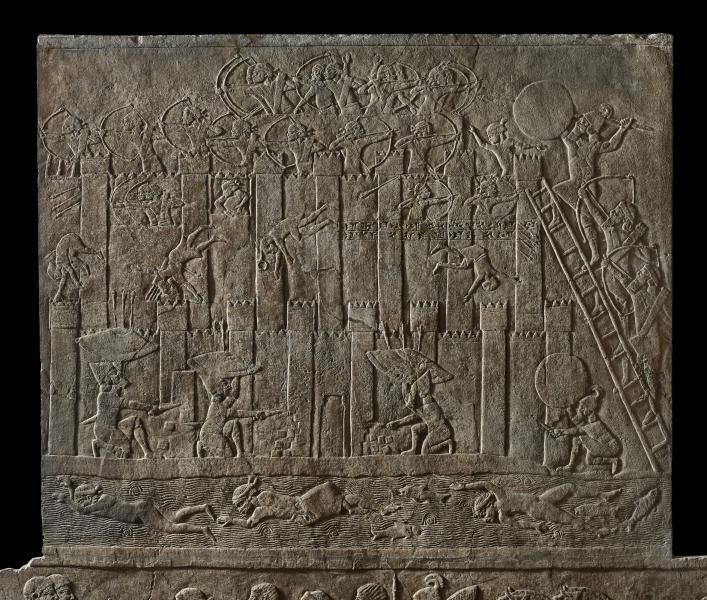
We will also see the relief that houses the, as far as we know, first representation of Nineveh with its fortified walls – most of the compositions of this type in the exhibition come from its aforementioned palace. This type of construction, always splendid in Assyria, also had a religious dimension and was erected in order to provide shelter from the dangers of the earthly and supernatural world.
Three protective spirits are represented, precisely, in another impressive relief mural that comes from the northern palace of the Assyrian capital, the residence of Ashurbanipal; It is a furry, a great lion and a god of the house. One of them was given the wrong attribute and was corrected, a sign of a desire for rigor and perfection.
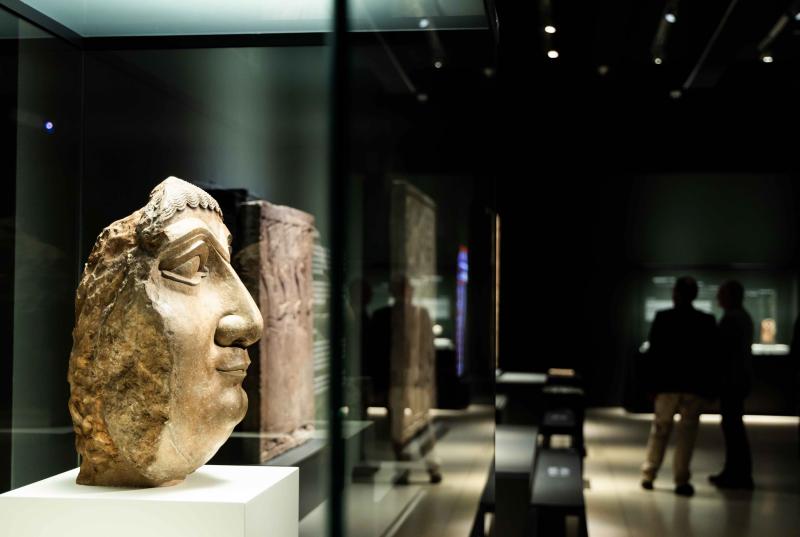
The gardens of Nineveh, in addition to being a recreation of paradise on Earth, were configured as a microcosm of the Assyrian empire, bringing together its plant wealth. Hunts were organized there, like the annual lion hunt.
Another relief from the north palace represents, in that idyllic setting, a lion walking alongside two musicians playing a lyre and a harp; Reference was made to the king’s ability to control and direct nature.
The heart of the exhibition is occupied by the section focused on the library of Nineveh, the most complete ever conceived, with nearly 10,000 texts engraved in clay with careful cuneiform writing – the oldest, again of Sumerian origin. These tablets had come from all over the empire and contained mythical, medico-magical or epic texts, such as the Epic of Gilgameshof which we will contemplate a tablet. We know that it fascinated Ashurbanipal, who could probably be considered an incarnation of the ancient king.
We do not know exactly where this library was located or how the works were stored, but we do know that its existence represented that first attempt to gather human knowledge in a single place, although it was not the first library itself.
A fourth section offers the obligatory military chapter: the expansion of the Assyrian empire from the eastern Mediterranean to western Iran required aggressive war campaigns; also of an effective administration by loyal officials who were also portrayed and who were able to take advantage of an advanced postal system and an extensive road network. Thus, in previously barren landscapes, crops were harvested, cities with sophisticated organization were built, and select articles and also new cultural traditions were produced.
In this chapter, a tablet with a royal mail stands out, as we advance with an envelope and seal, and beautiful Cypriot votive statues.
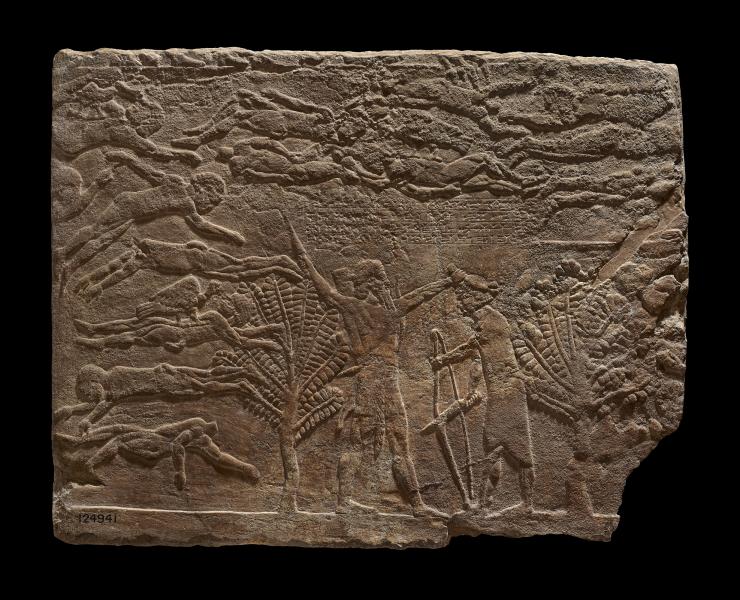
The penultimate episode refers purely to the war: approximately a decade after his appointment, Shamash-shum-ukin rebelled against Ashurbanipal (it is unknown whether by his own decision or by letting himself be carried away by the warrior ardor of the Babylonians, never favorable to Assyrian rule). A bloody civil strife broke out, ending with the siege of Babylon and its complete destruction within two years; one relief shows Ashurbanipal himself surveying the disaster.
This victory, however, would mark the beginning of the end of the Assyrian empire. With the future Sardanapalus dead, twenty years after his death, Babylon struck back and devastated Nineveh and the rest of its important cities. Another of the reliefs in CaixaForum presents traces of vandalism by the new victors on the hands of Asurbanipal controlling a car.
The last years of the most powerful king are relatively unknown; The sources do not provide data. Yes, the last written trace of which we have news will appear here in our path: an account of his military victories dedicated to Ishtar, Mesopotamian goddess of war (and of love and fertility). The commissioner, Sébastien Rey, has speculated that perhaps he spent that final time secluded in his library, reflecting on what he had achieved.
Speaking of libraries, of many currents, at the end of the 19th century, the texts of the archaeologists to whom we owe these finds in Iraq were part, which sometimes became best sellers. The last section honors them.
“I am Ashurbanipal, king of the world, king of Assyria.”
CAIXAFORUM MADRID
Paseo del Prado, 36
Madrid
From April 9 to October 4, 2026